
No Highland 72-Hour Release Feed
The Highland County Sheriff's Office has no verified online list of releases over the past three days. Middle River Regional Jail also does not expose a released or 72-hour tab through its official public JailTracker. Its public view is current-only. The Highland County Lockup has no verified online roster, release archive, or fixed publication schedule.
That absence changes the task. Instead of opening a ready-made rolling feed, define the three-day interval and request an existing MRRJ release log for that span. The request should be limited to Highland County commitments if the jail maintains a field that permits such a filter. If not, a named-person request is more precise. A court case and VINE status can help explain the event, but neither is a substitute for the jail transaction.
Build a Highland Three-Day Check
A three-day check works best as a short record audit. Choose exact start and end timestamps first. Then compare each custody source within that same period. Do not shift from three calendar days to the last 72 hours midway through the search because the boundary can change who belongs in the result.
- Write the precise start and end date and time for the requested window.
- Check the MRRJ Public Roster and record the observation time. A listed person remains in current listed custody.
- For a known person, search Virginia VINE and compare the facility, identifier, status, and update language.
- Read Virginia Online Case Information for a bond or disposition entry that may supply the legal authority for release.
- Ask MRRJ for its existing date-bounded release log and ask the Highland Sheriff about any local direct release or transport.
The Highland County 24-Hour Release List process is the better fit when only today's custody changes matter. The three-day process prioritizes a complete interval and a record request that can catch several days together.
Highland 72-Hour Record Fields
No public feed supplies a standard field set, so these fields should be named in the request for an existing log. Each helps determine whether an event belongs in the interval and whether it was a community release or movement to another custodian.
| Field | Use in a three-day review |
|---|---|
| Full booked name | Identifies the subject as maintained in the jail record. |
| Booking or commitment ID | Links the release to the correct confinement episode. |
| Release date and time | Places the completed event inside or outside the chosen window. |
| Release type or authority | Shows bond, recognizance, sentence completion, court order, or another basis. |
| Committing or releasing jurisdiction | Helps isolate Highland County commitments when maintained. |
| Destination or transfer agency | Separates release to the community from continued custody. |
A current MRRJ result can include intake data, charges, bond information, a booking image, and a prospective scheduled release date. Those fields describe a person presently shown in custody. They do not form a historical 72-hour release record, and a scheduled date is not an actual departure timestamp.
Highland Weekend Release Timing
A three-day interval can bridge days when a records office is not handling routine written requests. The underlying jail work still follows custody events, court orders, holds, and lawful release calculations. No official source establishes a special Highland or MRRJ public posting schedule for weekends or holidays, so a page update must not be promised at a fixed hour.
Use the exact physical release timestamp from the jail record when deciding whether an event falls within the window. A court entry may show why release became lawful, but it does not prove when MRRJ completed processing or whether another hold remained. VINE can report a custody change, yet its system feed or message may lag. A missing roster entry is less precise still.
When an office reopens, ask for the existing log using the same boundaries written down at the start. That avoids a moving window. If the question concerns only one person, the full Highland County released-inmate search can reconcile the jail, Sheriff, court, VINE, and VADOC paths.
Note: Keep a timestamp for every live-system observation because the roster, court docket, and notification service do not update as one record.
Request Highland Three-Day Records
MRRJ maintains the regional-jail confinement and release transaction, so its official FOIA contact is the primary written route for a person housed there. Ask for the existing release log or list between two exact timestamps. Add “limited to Highland County commitments if that field exists,” and request the release date, time, type or authority, booking identifier, and committing jurisdiction if maintained and releasable.
If the custodian cannot filter by Highland County, ask what existing jurisdiction or committing-agency field is used. A request for named people can then be narrowed by full booked name, date of birth when appropriate, case number, and approximate booking date. Request an electronic copy, accept lawful redaction, and seek an estimate before charges pass a ceiling you set.
The Highland County Sheriff's Office is the correct route for arrest, lockup, direct-release, and transport records made locally. Ask whether the person left local custody or was sent to MRRJ or another authority. The Sheriff may not be the custodian of the later MRRJ transaction.
Virginia FOIA has a general five-working-day response framework. An agency may produce records, cite a basis for withholding, produce part, state that records were not found, or use an allowed extension. That framework does not turn the written request into a live weekend feed.
Highland Release Versus Transfer
A three-day review must classify the exit, not just count names missing from the roster. MRRJ houses local prisoners and state-responsible people awaiting VADOC transfer. Someone who leaves MRRJ for state intake remains confined. A move to another jail, federal authority, or immigration custody is also continued custody.
| Exit path | What it means | Confirm with |
|---|---|---|
| Bond or recognizance | The jail episode ends while the court case can remain open. | MRRJ transaction and Highland court case |
| Time served | The custodial part of the sentence is satisfied. | Jail computation, release record, and sentencing order |
| Transfer to VADOC | MRRJ custody ends, but state confinement begins. | Destination field and VADOC locator after intake |
| Transfer to another authority | Confinement continues in another system. | Receiving agency or matching official locator |
The VADOC Inmate and Supervisee Locator is relevant after a plausible state transfer. Its current result or estimated date is not proof of a past MRRJ community release. Ask for the release or transfer record when the distinction matters.
Highland Current Roster Limits
The official MRRJ search interface is a current custody tool, not a three-day archive.
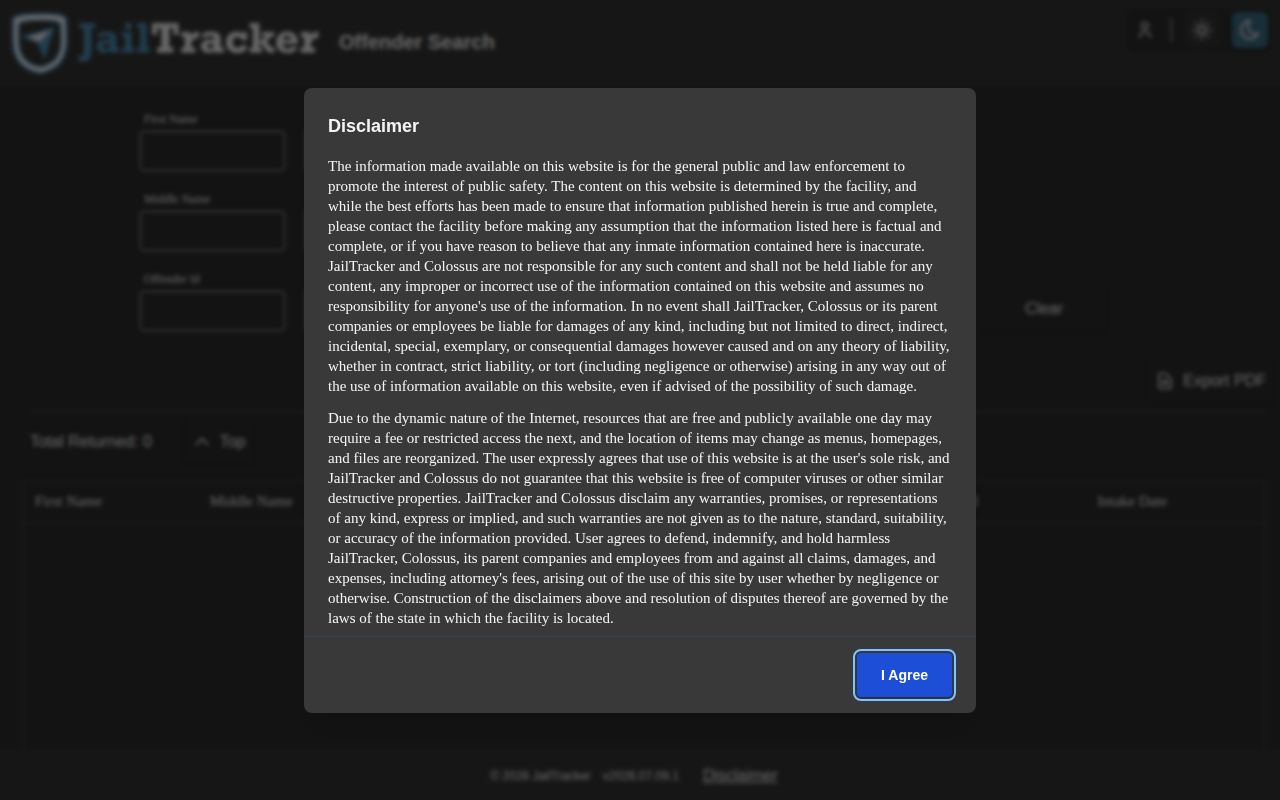
The live screen contains no public released or 72-hour filter. Use it to establish current listed custody at the observation time, then use the release transaction to establish what occurred during the chosen span.
Why Highland Three-Day Lists Differ
Highland County has no verified county-branded roster, and some documented defendants are housed at MRRJ in another locality. The Sheriff remains the first placement contact, while the regional jail controls the records it creates. A countywide three-day review may therefore cross at least two custodians before it can classify every exit.
The MRRJ official site confirms the regional facility and provides its roster link. The Highland Sheriff can speak to a direct lockup release or transport. MRRJ can identify an MRRJ release or transfer. The court can show the order behind the event, but it cannot prove that all holds were cleared at the moment the order was entered.
No official public retention window has been verified. Vendor configuration data hidden from the public release view is not an agency retention policy and should not be used to promise that a record will stay online. The durable path is an existing record requested from the right office.
A clean three-day result should retain the boundary used, the date each system was checked, and the office responsible for each fact. That makes later review possible if a court docket, roster, or VINE status changes. When a requested log contains a release authority but no destination, ask whether an existing transfer field is maintained and releasable. When it contains a destination but no community-release event, classify it as movement between custodians. This record-focused method prevents a multi-day list from blending true releases with transports that happened during the same span.
Note: Disappearance from MRRJ is the start of a Highland County release inquiry, not its final answer.