
Highland Projected and Actual Release
A projected date estimates when a sentence may permit release under the present sentence, jail credit, earned credit, and legal holds. An actual release date records when the custodian completed the release transaction. Those dates may match, but they answer different questions. A future date on a current custody record means the person is still confined.
Pretrial detention works differently. A person awaiting a Highland County case may receive bond or another release order, yet another case or detainer can keep that person confined. The court order supplies legal authority. MRRJ or the Highland County Sheriff records the physical release or transfer. A transfer from MRRJ to VADOC is not community release.
- Projected release date
- A forward-looking calculation based on the sentence and credit information the custodian has entered.
- Actual release date
- The date on the completed transaction showing when that custodian released or transferred the person.
- Jail credit
- Time already spent in qualifying custody that is applied to the sentence under the controlling order and law.
- Controlling sentence
- The sentence or combined sentence structure that presently determines the expected end of confinement.
- Detainer
- A hold or request from another authority that can prevent community release or lead to a custody transfer.
Scheduled versus actual: A scheduled date is a changeable calculation; only the custodian’s completed release record confirms that custody ended.
The current MRRJ roster can include a Scheduled Release Date for a current booking. That field is prospective, while a completed release field is not exposed on current results. Do not convert the scheduled field into a claim that the person has left the jail.
Find a Highland Projected Release Date
The first task is system identification. Highland arrest and court records begin in Monterey, some detainees are housed at Middle River Regional Jail in Staunton, and a state-responsible inmate can later enter VADOC. Each transition changes which office computes the date. The Highland County release search can establish the custody path before the date check begins.
- Read the Highland court docket and order. Identify whether the case is pretrial, a local sentence, or a state sentence, and note jail credit and any consecutive or concurrent terms.
- Ask the Highland County Sheriff whether a locally held person was released or transported. A transport record should identify the receiving custodian.
- For MRRJ custody, check the official current roster, then ask the jail for its existing time-calculation or release record when the date must be exact.
- For VADOC custody, use the seven-digit DOC ID when known. Otherwise enter at least the first three letters of the first name and the full last name in the official locator.
- Capture the exact date label shown on the live record. Do not rename it “projected” or “tentative” if VADOC uses different wording.
- Confirm a completed release through the custodian’s release documents, later status, court record, and Community Corrections when supervision follows.
VADOC says the locator is updated daily but can be inaccurate or out of date. It covers several current categories, including institutional inmates, district-supervised probationers and parolees, some people held in local or regional jails under VADOC authority, and CCAP participants. A no-result does not prove release or discharge.
Note: A name-only match is weak; compare the VADOC number, court case, age, and custody location before relying on a date.
VADOC Highland Release Date Search
The VADOC Inmate and Supervisee Locator is the official public route after a Highland County defendant enters state authority. Research could not reliably confirm the precise public release-date label because the live result flow uses CAPTCHA. The safe approach is to quote the label that appears for the actual person and preserve the date of the search.
The official VADOC locator interface shown below is the source for the search fields and disclaimer used in a Highland County state-prison lookup.
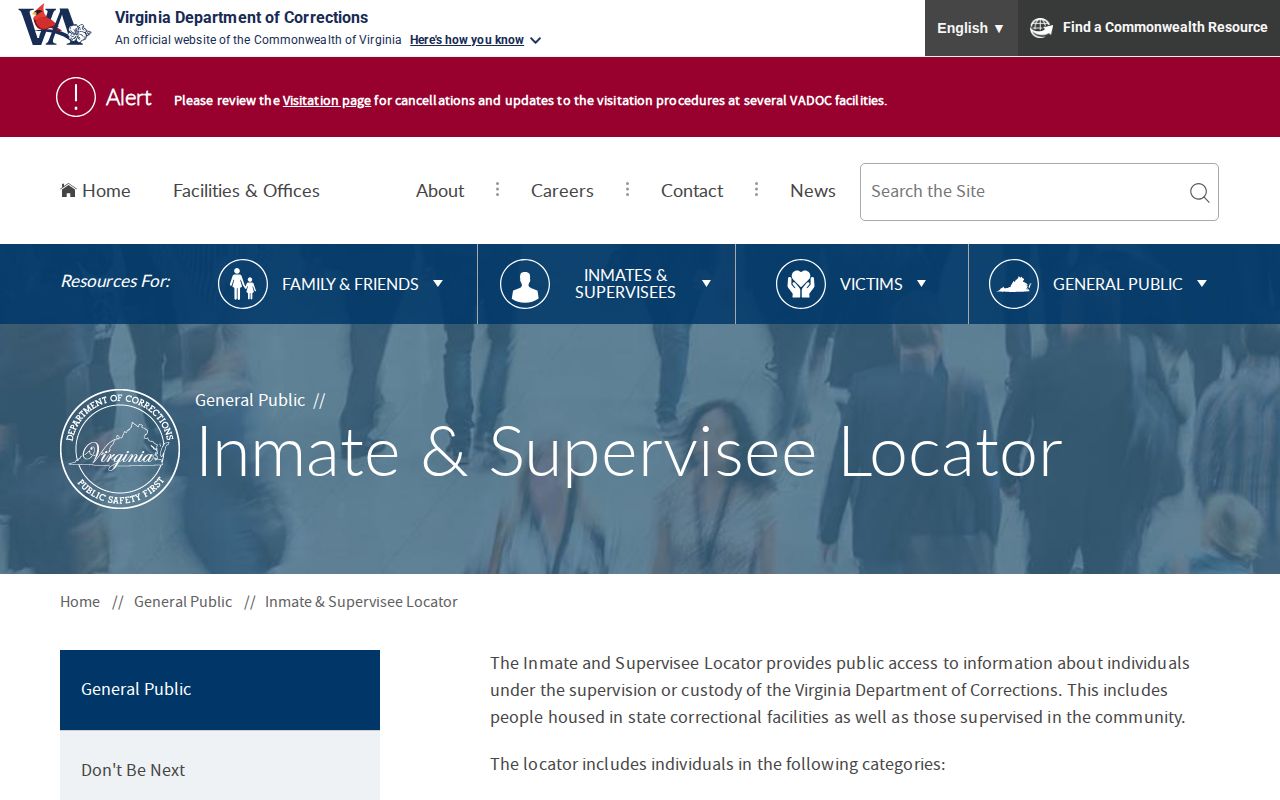
The image identifies the statewide search route, but it does not prove any person’s release date without a matched live record.
| Search field | Use | Important limit |
|---|---|---|
| DOC ID | Seven-digit VADOC identifier | Best route when known |
| First name | At least the first three letters | Must be paired with full last name |
| Last name | Full surname | Spelling and aliases can affect results |
| Location | Optional result filter | Transfer processing may lag |
| Race, gender, age | Optional identity filters | Use only to distinguish the correct person |
| Displayed date | Prospective time calculation if present | Quote the portal’s exact label |
Former prisoners may no longer produce a useful result. In that case, ask VADOC for existing commitment and release dates, release type, facility, VADOC number, and releasable supervision information. The public locator is not promised as a full archive of discharged people.
Virginia Credits for Highland Release Dates
Virginia earned sentence credits can reduce the time that must be served, but one flat percentage does not fit every Highland County state sentence. Va. Code § 53.1-202.3 contains earning rates, categories, exclusions, and credit classes. Section § 53.1-202.4 governs how earned credits reduce the term.
The familiar “85%” shorthand comes from a historical baseline rate of 4.5 credit days for each 30 days served. That credited cycle works out to about 86.96% service when the maximum credit continues to apply. Current law has offense-dependent rules and amendments. A website percentage cannot replace VADOC’s individual time computation.
The official VADOC time-computation page explains the department’s calculation framework. Its captured view appears below.
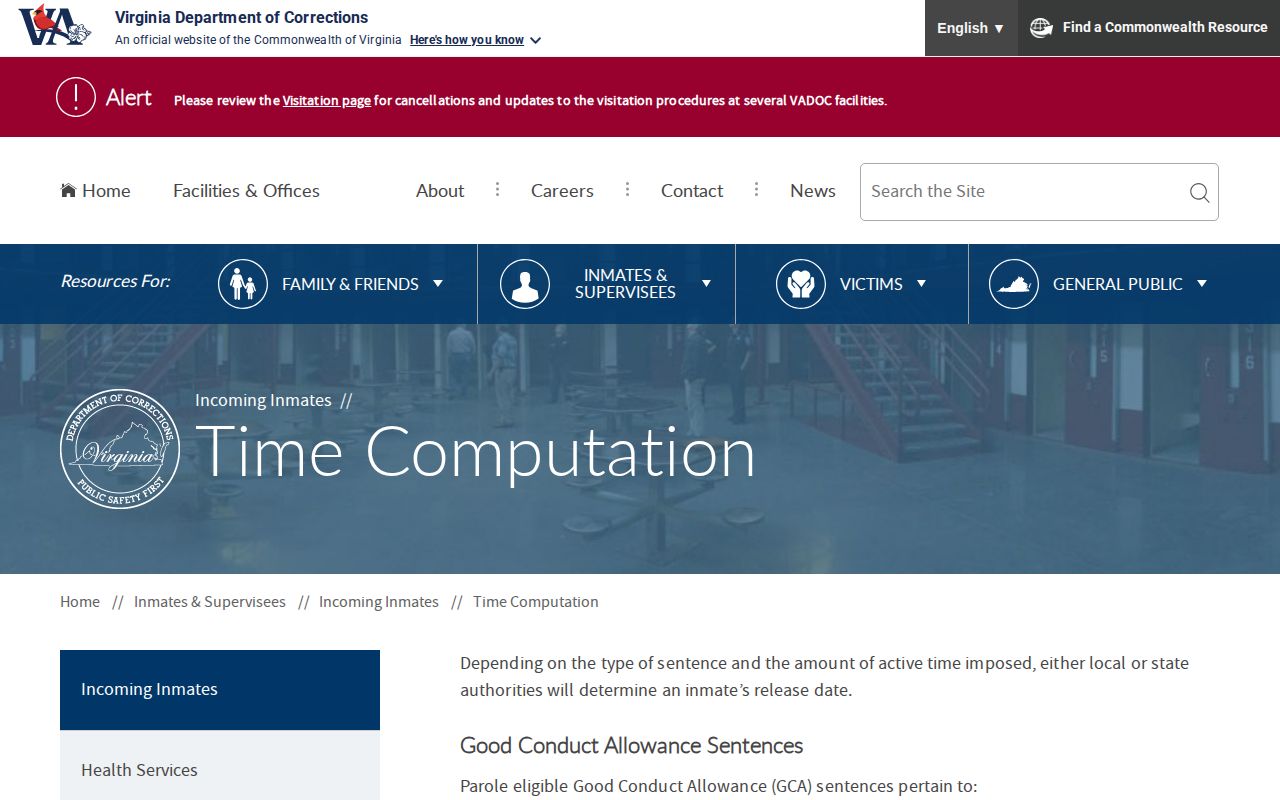
This VADOC source supports the calculation method. The matched inmate record and sentence file still control the person-specific date.
Virginia also largely ended discretionary parole for felony offenses committed on or after January 1, 1995, subject to statutory exceptions. Va. Code § 53.1-165.1 supplies that baseline. Parole eligibility and expected sentence completion are distinct dates.
Highland Release Calculations Change Systems
Highland County has a distinctive custody boundary. A person may begin at the Highland County Lockup, move to MRRJ, and later enter VADOC. A local sentence is implemented by the jail custodian using the court order, credit for time served, and the law that governs local jail records and allowances. A state-responsible sentence is calculated by VADOC after transfer.
Va. Code § 53.1-116 requires the sheriff or jail superintendent to keep a record of each prisoner’s conduct and bears on local allowance administration with other applicable law. MRRJ, not the Highland clerk, performs the physical jail computation for a person held there. The clerk’s order remains essential because the jail must implement it.
Ask MRRJ for the existing time-calculation and release record if a local date is disputed. No official MRRJ weekend shortcut or fixed daily release hour was verified. VADOC separately states that eligible state facility discharge or parole releases occur by 11:59 p.m. on the release date, weather permitting. That statewide facility rule must not be applied to MRRJ.
Note: The “85%” shorthand cannot be carried from a VADOC sentence to a local MRRJ term without the law and custodian’s calculation.
Why Highland Release Dates Change
A date can move when the underlying sentence record, credit record, or custody status changes. Some changes add time. Others correct the term or restore credit. The public display may also trail a completed administrative action. Ask the custodian which existing document supplies the revised date.
| Factor | Possible effect | Confirm with |
|---|---|---|
| Additional sentence | Adds a new controlling term or changes total time | Court orders and custodian computation |
| Consecutive or concurrent structure | Changes how multiple terms combine | Sentencing orders and time record |
| Jail credit correction | Adds or removes credited prior custody | Court and MRRJ or VADOC |
| Credit class or discipline | Changes the rate or amount of earned credit | Custodian’s credit record |
| Detainer or hold | May block community release or cause transfer | Holding and receiving agencies |
| Amended court order | Changes the legal sentence data | Highland clerk and custodian |
| Parole decision | May authorize conditional release in an eligible case | Virginia Parole Board and VADOC |
| Administrative correction | Fixes a data or calculation error | Agency that created the field |
A detainer is a request or legal hold from another authority. Release from one jail to that authority is a transfer, not freedom in the community. The next custody system must be checked before describing the person as released.
Highland Parole Date Versus Discharge
Parole eligibility, a Board grant, conditional release, and final sentence discharge are four different events. Older and special statutory cases may be reviewed by the Virginia Parole Board. Most post-1995 felony offenses follow the no-discretionary-parole baseline, with exceptions set by law. The actual person’s offense date and category matter.
A Board grant is not a physical release timestamp. Processing, release conditions, another sentence, or a hold can still affect the next step. Monthly Board decisions can establish the vote and decision, while VADOC records establish the later facility release and supervision. The expected discharge date may remain later than a parole release date because supervision continues.
Do not use the parole formula as a substitute for VADOC’s sentence calculation. Old-law eligibility under § 53.1-151 includes different fractions, caps, life-term rules, and exclusions. A first eligible date cannot be calculated from the sentence length alone without the full legal category.
Confirm Highland County Actual Release
Confirmation depends on the custodian. For a direct Highland County Lockup release, ask the Sheriff for the local release entry and pair it with the magistrate or court order. For MRRJ, request the jail’s completed release transaction, including release date, time, type or authority, and destination when maintained. For VADOC, use release documents, the current status, and a records request if the locator no longer shows the person.
Virginia VINE may provide a custody-change alert for one known person in participating local custody. It is not a sentence calculator or a certified release record. State-prison victim notification now follows VADOC’s NAAVI route. The Highland County VINELink check explains that system handoff and the need to register before the event.
The official VADOC facility-release page describes the state release process shown in the captured source below.
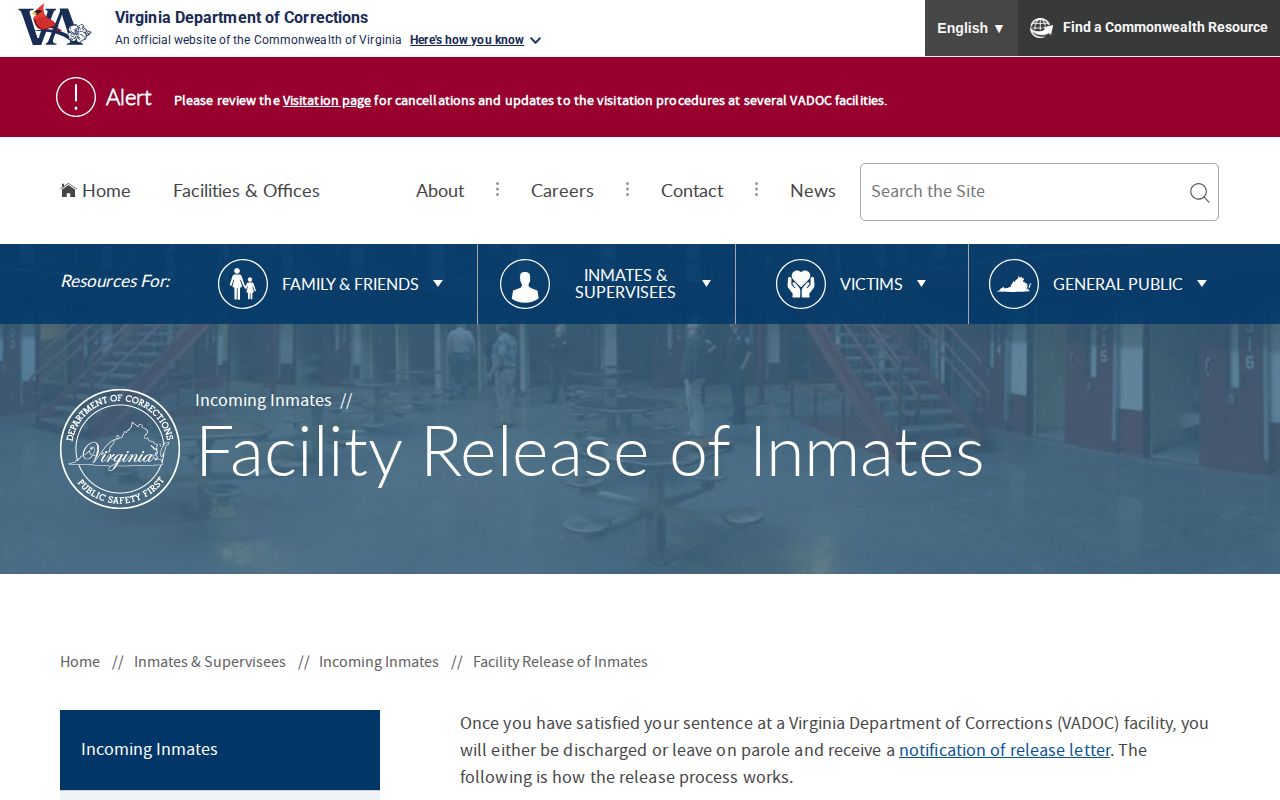
The process view helps separate an expected date from the documents and steps tied to actual release.
Record when each source was checked. A current roster proves present custody only at that observation time. Disappearance from it is a lead, not proof of release. A completed transaction plus the court or sentence authority gives the strongest account of what happened.